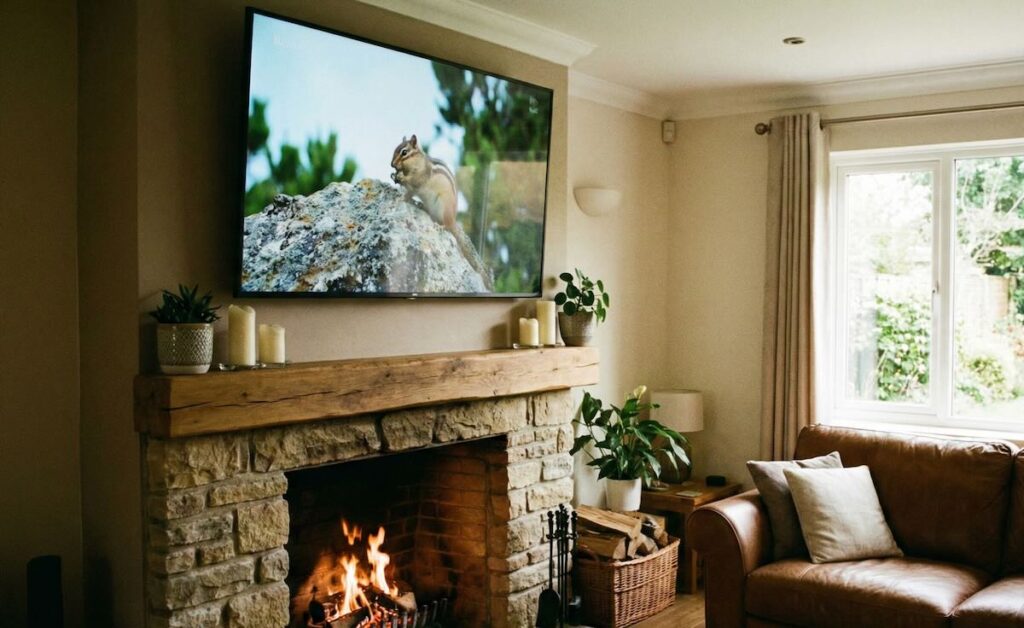
Mounting a TV above your fireplace can transform your living space, saving space and creating a modern, clean look. However, this type of installation comes with its own set of challenges, especially when it comes to structural support and viewing comfort.
In our professional experience at TVMounty, we’ve seen all types of fireplace wall structures — from perfectly framed walls to chaotic setups with almost no vertical studs. The key to a safe and smart installation lies in understanding the wall’s internal structure and choosing the right mounting method accordingly.
The Number One Challenge: Wall Framing Structure
One of the biggest issues when mounting a TV above a fireplace is the internal framing of the wall. Unlike standard walls, which typically have vertical studs spaced 16 inches apart (perfect for most TV wall mounts), the space above a fireplace often lacks this regular structure.
Instead, you might encounter:
- Metal framing or horizontal studs
- Asymmetrical placement of studs
- No studs at all behind your desired TV position
That’s why a stud finder is your best friend at this stage. Use a high-quality electronic stud finder to inspect the wall above your fireplace thoroughly. Move it slowly across the area and mark the locations where studs are found. Try to confirm the direction and type of the stud — is it vertical or horizontal? Wooden or metal?
If No Traditional Studs Are Found
If you’re unable to locate two vertical studs spaced 16 inches apart — which is common above fireplaces — don’t worry. There are still safe options. In some cases, you might be able to locate:
- A single vertical stud off-center
- A horizontal stud at the height where you want to mount your TV
If at least one solid framing member is available, you can anchor part of your wall mount to that stud. For the other mounting points, you’ll need to use special toggle anchors, often referred to as “butterfly anchors” or “toggle bolts.”
Step-by-Step Plan Using Anchors + Stud
 Mark the Desired TV Height — Start by determining the ideal position of the TV. Mark the bottom edge of the screen, then measure the distance to the wall mount holes on the back of the TV to calculate where your bracket should go.
 Use a Level and Outline the Mount — Hold the wall bracket against the wall at the correct height and make sure it’s level. Mark all anchor points with a pencil.
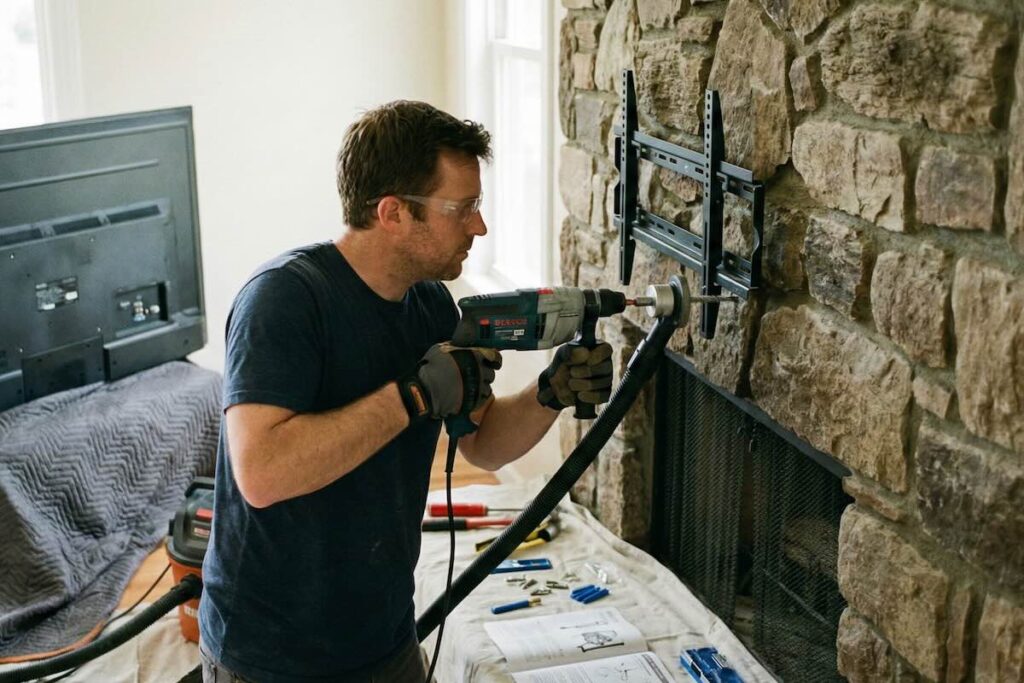
 Drill Pilot Holes — For the toggle bolts, use a 1/2-inch drill bit (or follow the anchor instructions). Carefully drill the marked holes. Do not apply too much pressure, especially if you are working with drywall or plaster over brick.
 Insert Toggle Anchors — Push the toggle bolts through the drilled holes. These will open up behind the wall and spread the load over a large area, making them much stronger than standard drywall anchors.
 Secure the Wall Mount — Line up the wall mount with your anchors and the stud, then begin tightening the bolts. Make sure not to overtighten toggle bolts, as this can reduce their holding power or damage the drywall.
 Mount the TV — Once the wall bracket is secure, attach the TV mount arms to your TV, and carefully lift the TV onto the wall bracket. Always have a second person help, and never hold the TV by the screen.
This hybrid approach — combining one stud with high-quality toggle anchors — is safe for TVs up to around 80 inches, assuming your bracket distributes weight evenly and the wall surface is stable.
Problem #2: Positioning and Choosing the Right Mount
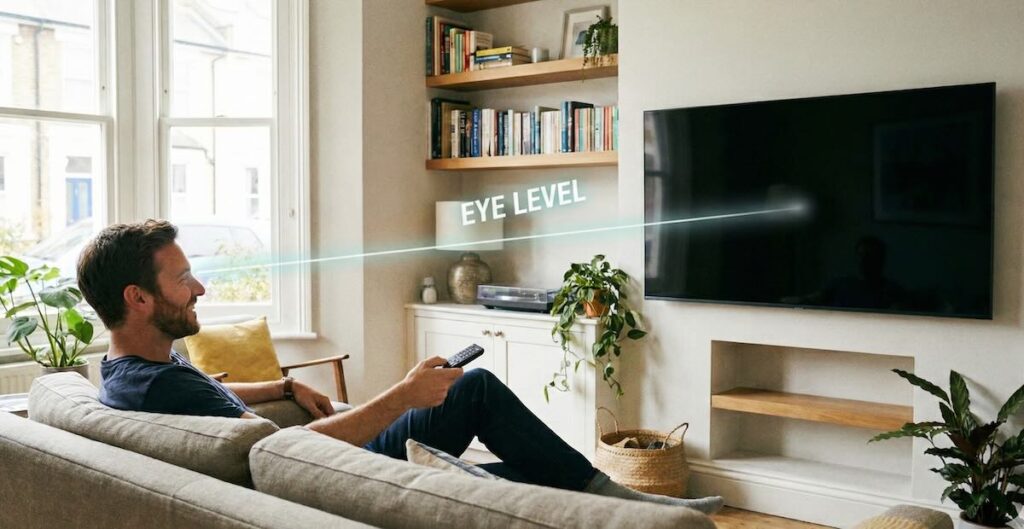
In an ideal world, your TV screen should be positioned at eye level when you are seated. This ensures the most comfortable and ergonomic viewing angle, minimizing neck strain during long movie nights or binge-watching sessions.
However, mounting your TV above a fireplace typically places the screen significantly higher than eye level. This can lead to discomfort unless you take steps to address the viewing angle issue. Thankfully, there are specific types of TV wall mounts designed to help with this exact situation.
Tilt Mount: Adjust the Angle for Comfort

A tilting mount allows you to angle the TV downward, directing the screen more toward your eye line. This simple adjustment makes a massive difference in comfort, especially when the TV is mounted high above the fireplace mantel. Most quality tilt mounts allow a range of around 5° to 15° downward, which is usually enough to reduce neck strain and improve screen visibility.
Full-Motion Mount: Ideal When Your Fireplace Isn’t Centered to Seating

If your fireplace is not directly in front of your main seating area — for example, if your couch is off to one side — then a tilting mount alone won’t solve the problem. In this case, a full-motion mount (also known as an articulating mount) is the best option.
This type of mount allows you to:
- Pull the TV away from the wall
- Swivel it left or right toward your seating position
- Tilt it downward for better viewing comfort
It provides the most flexibility and helps you get the perfect angle regardless of where you’re sitting. With a full-motion mount, you can also adjust the position seasonally, or depending on where guests are seated.
Flat Mounts Are Not Recommended

While flat (or fixed) mounts may be cheaper and easier to install, they are not recommended for fireplace mounting. Once installed, they do not allow any adjustment in angle or direction. With the screen positioned high on the wall, this lack of flexibility can result in a poor viewing experience.
In short: go for a tilting or full-motion mount. Your neck — and your guests — will thank you.
Problem #3: The Structural Risks of Mounting Above a Fireplace
While mounting a TV above the fireplace can be aesthetically pleasing and space-saving, it comes with its own set of risks — especially when it comes to the structure behind the wall.
Wall Framing May Be Weaker
Unlike standard walls that are typically framed with full-size vertical studs spaced 16 inches apart, the framing above a fireplace can be quite different. In many cases, builders use smaller studs or even metal framing to fit the chimney or fireplace box, which makes the wall less structurally sound for supporting heavy loads like large TVs.
Risk Increases with Larger TVs
Even if you manage to locate a few studs above the fireplace using a stud finder, it’s important to evaluate the quality and spacing of those studs. Heavy TVs over 90 inches place a significant load on the mounting bracket, and the risk of failure is much higher if the studs are narrow, not well-anchored, or spaced too far apart.
What If Studs Can’t Be Found?
If no suitable studs are available, you may resort to using heavy-duty wall anchors such as toggle bolts or “butterfly anchors.” These anchors expand inside the drywall to distribute the weight over a larger surface area. However, even the best anchors have limits.
Our general recommendation: Do not mount TVs larger than 80 inches using only wall anchors. The risk of drywall failure — especially in older homes — is simply too high.
Hybrid Mounting Approach
In some installations, it’s possible to combine both methods for extra security. For example:
- Use two heavy-duty screws into a located stud
- Supplement with four additional toggle bolts into drywall where studs are not available
This method spreads the load across six mounting points, reducing stress on any single one. It’s not a substitute for a solid wall, but it’s a practical compromise when working with limited framing support above a fireplace.
Important: Make sure your mounting bracket is wide enough to allow for this kind of installation. Some high-quality brackets are designed to span 24–32 inches or more and offer multiple hole patterns for flexible anchoring.
Problem #4: The Impact of Heat from the Fireplace
Another significant issue when mounting a TV above a fireplace is the heat generated by the fireplace itself. Excessive heat can damage both the TV and the mounting bracket, leading to premature wear, reduced lifespan, or even total failure of the equipment.
Heat Damage Risks
Fireplaces, especially those that use wood, gas, or other combustible materials, can produce a substantial amount of heat. Even if the TV is mounted high above the fireplace, prolonged exposure to heat could cause:
- Degradation of internal components like the motherboard, which can lead to malfunctions or shorter lifespan of the TV.
- Damage to the mounting bracket or screws, leading to possible instability over time.
- Discoloration or distortion of the TV screen due to thermal stress.
Heat Shielding and Distance
To prevent these issues, make sure the TV is mounted at an appropriate distance from the fireplace. The further away the TV is from the direct heat source, the safer it will be. It’s recommended to keep at least 6–12 inches of clearance between the top of the fireplace and the TV’s bottom edge, depending on the type of fireplace and its heat output.
Additionally, using heat shielding materials such as thermal barriers or placing the TV inside a custom-built cabinet with ventilation can help protect it from the heat.
Tools & Recommendations for Safe Installation
Tools You’ll Need
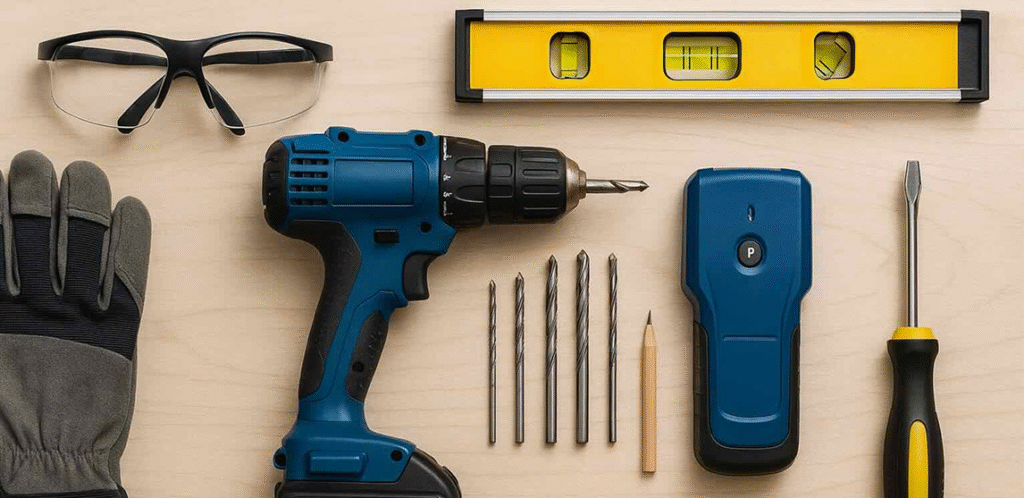
When installing a TV above a fireplace, you’ll need a few essential tools to ensure everything is done safely and securely:
- Stud Finder: To locate studs, especially important when working above a fireplace where studs may not be easily visible.
- Level: To ensure that your TV is perfectly straight once mounted. This is crucial for aesthetics and functionality.
- Drill: A power drill is necessary for drilling pilot holes and inserting anchors or screws.
- Toggle Bolts / Butterfly Anchors: If studs are not available, these anchors distribute the weight of the TV evenly across the drywall, making it safer to mount larger TVs.
- Screwdriver / Wrench: For tightening bolts and screws to secure the mounting bracket properly to the wall.
- Measuring Tape: To measure and center the TV on the wall accurately, ensuring it’s positioned at the perfect height and angle.
- Heat Shielding Material: If necessary, use thermal barriers to protect the TV from excessive heat from the fireplace.
Key Recommendations for Safe Installation
Here are some essential tips to make sure your TV mounting project goes smoothly and safely:
- Double-check the wall’s structural integrity: Always confirm that the wall can support the weight of the TV and bracket, especially when mounting above a fireplace. Use anchors when studs are not available.
- Consider the viewing angle: Choose an adjustable or full-motion mount to allow for easy angle adjustments, especially for high-mounted TVs above a fireplace.
- Don’t exceed the weight limits: Ensure the wall, mounting bracket, and anchors can handle the TV’s weight, especially for large models (over 80 inches).
- Protect from heat: Ensure that the TV
Conclusion
Mounting a TV above a fireplace can certainly add to the aesthetics of your living space, but it comes with its own set of challenges. From finding the right studs to dealing with heat and ensuring proper viewing angles, the process requires careful planning and the right tools.
By taking into account the specific construction of your wall, considering heat shielding options, choosing an appropriate mounting bracket (such as full-motion or tilting mounts), and using proper anchors and bolts, you can safely and securely mount your TV above the fireplace. Always ensure the weight of the TV is evenly distributed, and make sure the installation is done in a way that minimizes risks for both your equipment and your home.
While there are challenges involved, with the right approach and careful attention to detail, you can enjoy a beautifully mounted TV above your fireplace for years to come. If in doubt, don’t hesitate to consult a professional installer who can ensure the setup is done correctly and safely.
Happy mounting!