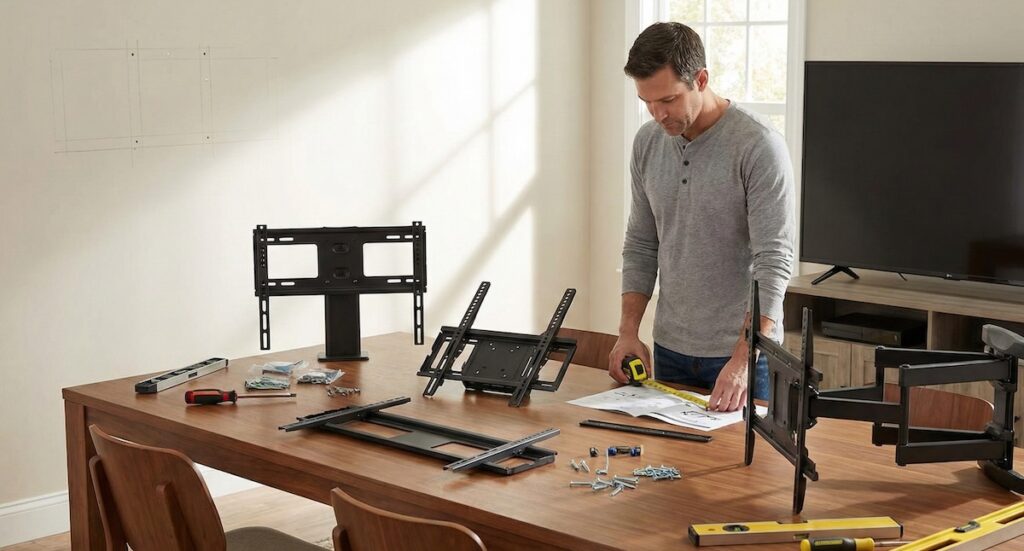
Mounting your TV at the right height is just as important as choosing the right size or mount type. A poorly placed screen can cause neck strain, reduce picture quality, and ruin the comfort of your viewing experience. Whether you’re mounting in a living room, bedroom, or even above a fireplace — this guide will help you find the perfect height for your setup.
- General Rule of Thumb for TV Height
- How to Calculate the Perfect Height
- Best Mounting Height by Room Type
- TV Size Chart with Recommended Heights
- TV Mount Angle: Should You Tilt?
- Common Mistakes to Avoid
- FAQ
- Conclusion
General Rule of Thumb for TV Height
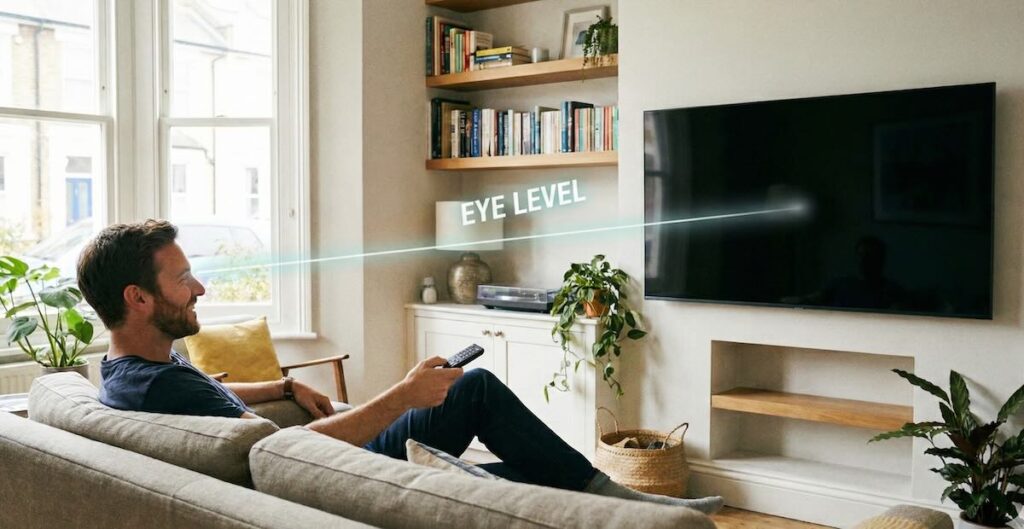
The most widely accepted rule is simple: the center of your TV screen should be at eye level when you’re seated. For most people, that means the center of the screen should sit around 42 to 48 inches (106–122 cm) from the floor, depending on your seating height.
Why eye level? Because your eyes naturally rest in the middle third of the screen, reducing neck strain and providing the best visual comfort during longer viewing sessions.
What Most People Do Wrong
- Mounting too high: This is the most common mistake, especially when mounting above a fireplace. It forces you to tilt your head, causing discomfort over time.
- Ignoring seat height: A TV mounted at the same height for a couch and a recliner won’t feel the same. The lower you sit, the lower the screen should go.
- Using aesthetics only: Centering the TV based only on wall symmetry can result in poor ergonomics. Comfort should come first.
By following the eye-level principle, you’ll achieve a setup that not only looks good — but also feels right every time you watch.
How to Calculate the Perfect Height
While the general rule of “eye level” works well, you can get even more precise by calculating your ideal TV height based on viewing distance and screen size.
Step-by-Step Guide
- Measure your seated eye level: Sit on your main couch or chair and measure from the floor to your eyes. For most adults, this ranges from 40″ to 45″ (102–114 cm).
- Find your TV’s vertical height: Look up your TV model’s height (not diagonal). For example, a 55” TV is about 27” tall.
- Divide TV height by 2: This gives you the screen center. (E.g., 27” ÷ 2 = 13.5”)
- Subtract from eye level: If your eye level is 42”, then 42” – 13.5” = 28.5” from the floor to the bottom of the TV.
What If You’re Using a Recliner?
Recliners change everything. Since your head tilts back slightly, the screen should be a bit higher and angled downward. In this case, a tilting mount is recommended. Raise the center of the TV about 6–8 inches above your regular eye level to compensate for the reclined posture.
Wall vs Stand Mounting
If your TV is on a cabinet or entertainment unit, the height is mostly fixed by the furniture. But you can still tilt the screen slightly if it feels too low. For wall-mounted TVs, you have full control — and it’s worth getting it right from the start.
Best Mounting Height by Room Type
The ideal TV height can vary depending on which room you’re mounting it in. Let’s break it down by common spaces:
🛋️ Living Room
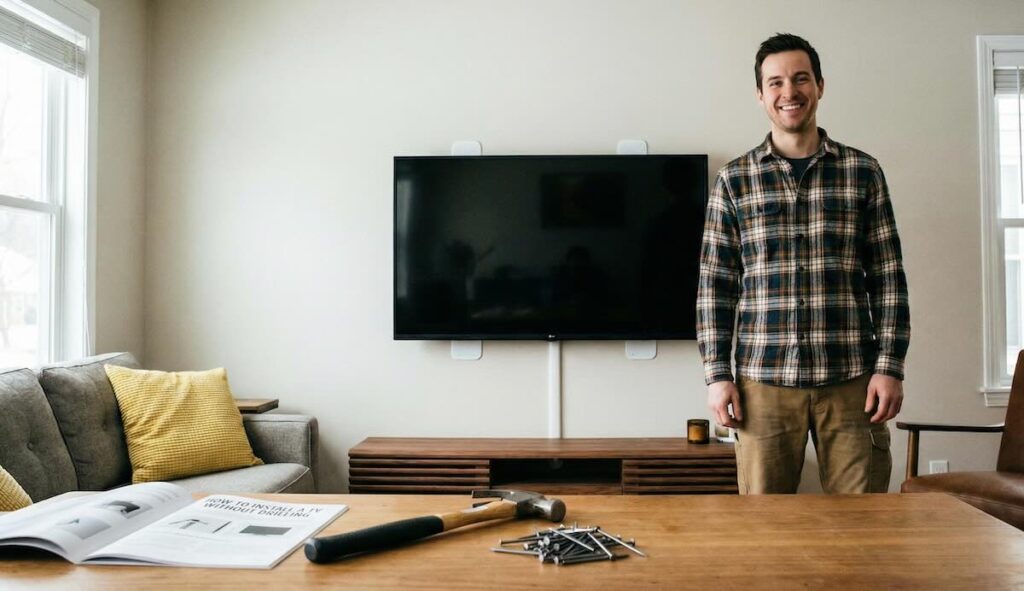
In most living rooms, your main seating is a couch or sectional at standard height. Aim for the center of the TV screen to be 42–48 inches (106–122 cm) from the floor. If the TV is large (65”+), lean toward the lower end of that range for comfort. Keep in mind the angle from all seats — especially if you have a wide layout.
🛏️ Bedroom
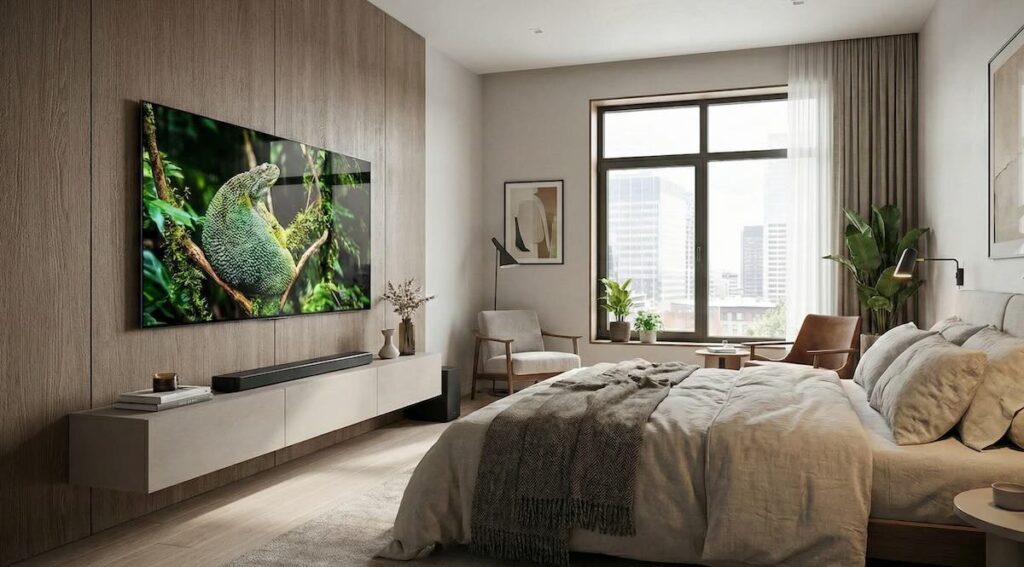
Since you usually watch TV while lying down in bed, the screen can be mounted higher — around 50–65 inches from the floor to the center of the screen. Use a tilting mount to angle it downward and avoid neck strain. The higher the TV, the more tilt you’ll need.
👩🍳 Kitchen
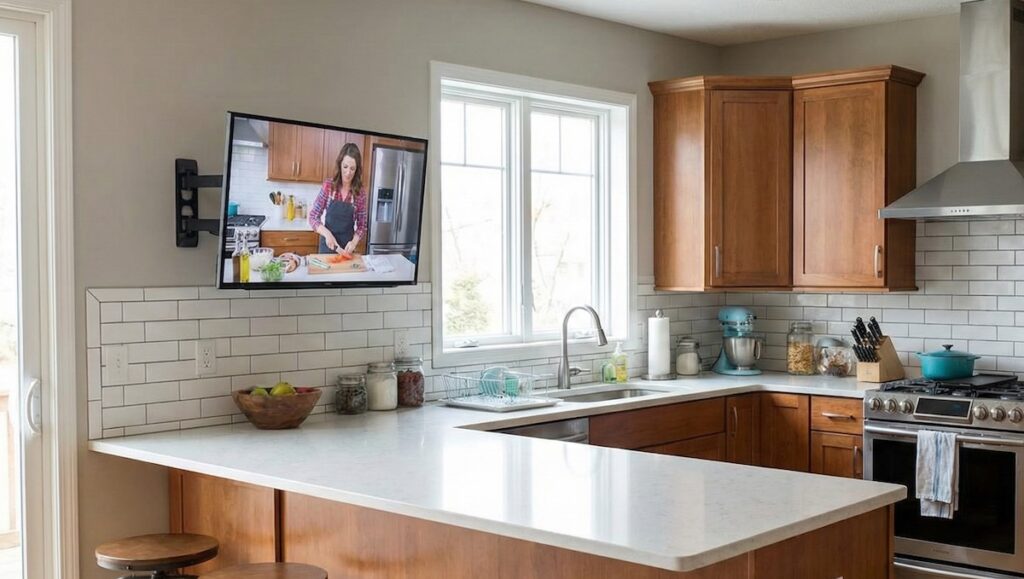
In kitchens, TVs are often watched while standing or moving around. Wall space is also limited. Mount the screen above eye level (50–60 inches) or even in a corner. Full-motion mounts are ideal here for flexibility.
🔥 Above the Fireplace
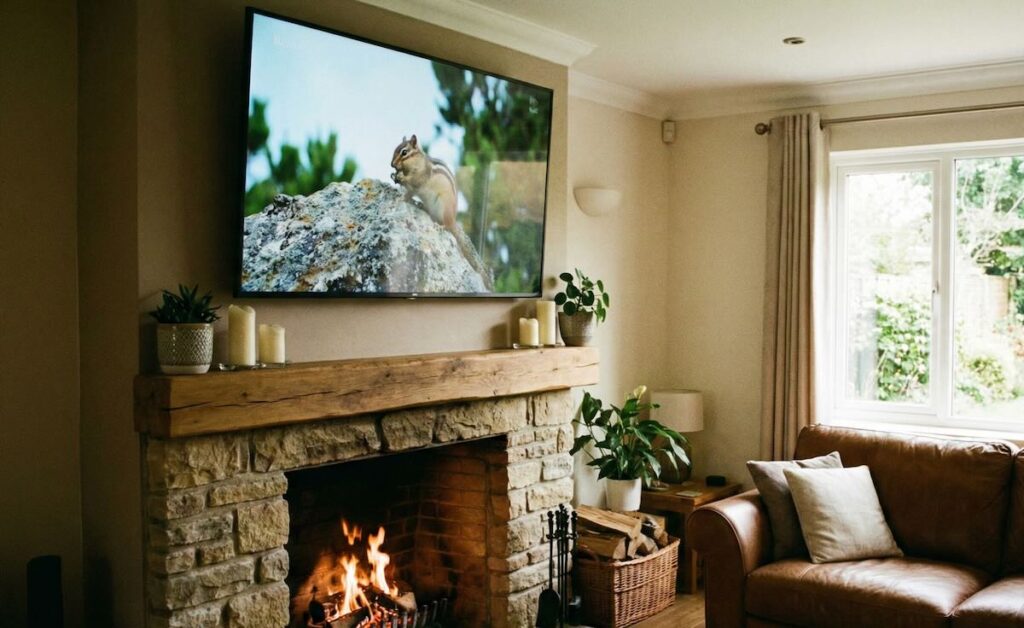
This is the trickiest placement — and often the most misjudged. Because fireplaces raise the screen higher than normal, it’s easy to place the TV too high. Ideally, try to keep the center of the TV no higher than 60–65 inches from the floor. Use a tilting or pull-down mount to angle it for better comfort.
Tip: Before drilling, sit in your normal spot and simulate the TV’s height with painter’s tape or cardboard cutout — it helps visualize the result.
TV Size Chart with Recommended Heights
Here’s a quick reference chart to help you determine the ideal height for your TV based on screen size. These values assume you are seated about 10–15 feet away on a standard couch and your eye level is approximately 42 inches from the floor.
| TV Size | TV Height (Approx.) | Center of Screen Should Be | Distance from Floor to Bottom of TV |
|---|---|---|---|
| 43″ | 21.1″ | ~42” from floor | ~31.5” |
| 50″ | 24.5″ | ~42” from floor | ~29.8” |
| 55″ | 27″ | ~42” from floor | ~28.5” |
| 65″ | 32″ | ~42” from floor | ~26” |
| 75″ | 37″ | ~42” from floor | ~23.5” |
Note: These are approximate numbers. If you have lower or higher seating, adjust accordingly. When in doubt — center the screen at your natural seated eye level.
TV Mount Angle: Should You Tilt?

Mounting height is only half the equation — the angle of your screen matters just as much. A TV that’s mounted slightly higher than eye level may require a downward tilt to maintain comfort and reduce glare.
When You Should Use a Tilting Mount
- You’re mounting the TV above standard eye level (e.g., over a fireplace)
- You watch TV while lying down (bedroom setups)
- There’s overhead light or windows causing glare on the screen
Flat vs Tilting vs Full-Motion
- Flat Mount: Flush to the wall, no movement. Cleanest look, but offers no angle adjustment.
- Tilting Mount: Allows vertical movement only. Great for reducing glare or adjusting height comfort.
- Full-Motion Mount: Offers tilt, swivel, and extension. Ideal for corner setups, open spaces, or when multiple seating angles are used.
Glare and Eye Comfort
If your room has large windows or ceiling lights, tilting the TV downward helps minimize reflections. It also aligns your eye level better with the center of the screen, especially if the TV is mounted slightly higher than recommended.
Common Mistakes to Avoid
Even with the best intentions, TV mounting height mistakes are common. Here are the ones to watch out for:
- Mounting too high “because it looks good” — Visual symmetry doesn’t always mean ergonomic comfort. Function comes first.
- Not measuring seated eye level — Using your own eye height gives the most accurate result, not someone else’s chart.
- Ignoring tilt needs — If you mount high, but don’t tilt, you’re creating an uncomfortable viewing angle.
- Assuming all rooms are the same — Bedrooms, kitchens, and living rooms require different mounting logic.
- Copying someone else’s setup blindly — What works in one home may feel completely wrong in another.
FAQ
What’s the ideal height to mount a 55-inch TV?
Around 28–30 inches from the floor to the bottom of the TV, assuming seated eye level is 42 inches. The center of the screen should be around eye level.
Should I mount my TV higher if it’s larger?
Not necessarily. Larger TVs have more vertical height, so the center still needs to align with your eyes. In some cases, you’ll mount them lower to balance the screen height.
Is mounting above a fireplace bad?
It depends. If the fireplace doesn’t get too hot and you use a tilting or pull-down mount, it can work fine. Just avoid placing the TV too high without proper angle correction.
Can I tilt a TV without a tilt mount?
No. Fixed mounts don’t allow any angle adjustment. If tilt is needed, use a tilting or full-motion mount.
How do I test height before drilling?
Use painter’s tape or cardboard cutouts on the wall to simulate the screen position. Sit down and check the view from your usual spot.
Conclusion
Finding the best height to mount your TV is about more than just style — it’s about creating a comfortable, enjoyable viewing experience. Whether you’re relaxing in the living room, lying in bed, or cooking in the kitchen, aligning the screen with your eye level makes a big difference.
Measure your seating position, choose the right mount, and tilt when necessary. A few extra minutes of planning today will reward you with years of strain-free entertainment.
And remember: if you’re ever unsure, it’s always okay to ask a professional for help — especially with tricky layouts or fireplace installs.